These St. Louis interior design clients felt overwhelmed in their new home, struggling to create a space that felt complete and inviting.
Their project focused on evaluating their style preferences and designing a clear plan tailored to their needs.
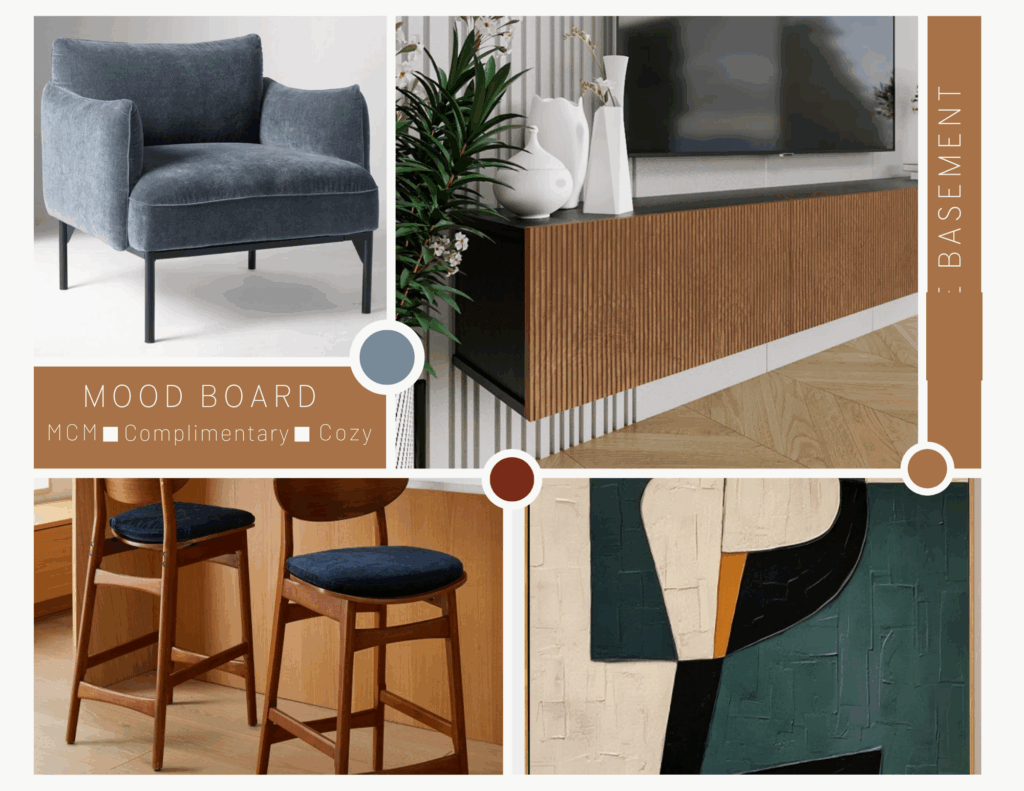
The design blended mid-century modern and boho warmth, prioritizing comfort, functionality, and a welcoming atmosphere.
The process emphasized clarity and intention, avoiding rushed decisions and impulse buying.
The Moment They Knew Something Had to Change
Two years.
That’s how long my clients in St. Louis lived in their new home knowing something wasn’t quite right. But they just didn’t know where to start.
They loved the bones of the house. The layout worked. The space had so much potential. But every time they returned from a trip, the same feeling settled in:
It felt empty & incomplete.
Hosting friends and family brought quiet the frustration. They wanted their home to feel comfortable and finished. They wanted their home to be a place that reflected them. Starting from a blank slate felt overwhelming, and a complete home felt even further away. They needed interior design services, that’s when they reached out to me.
They said it best themselves:
“We need guidance and time to budget it all. We have a style, but are so overwhelmed.”
That sentence told me everything.
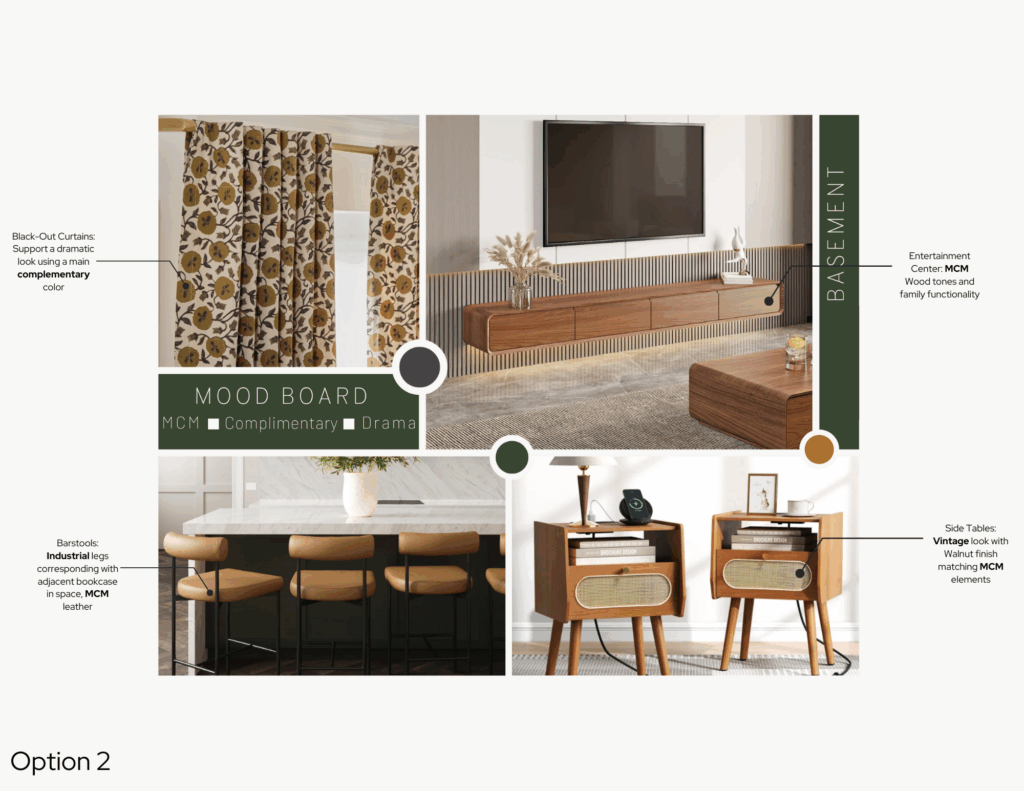
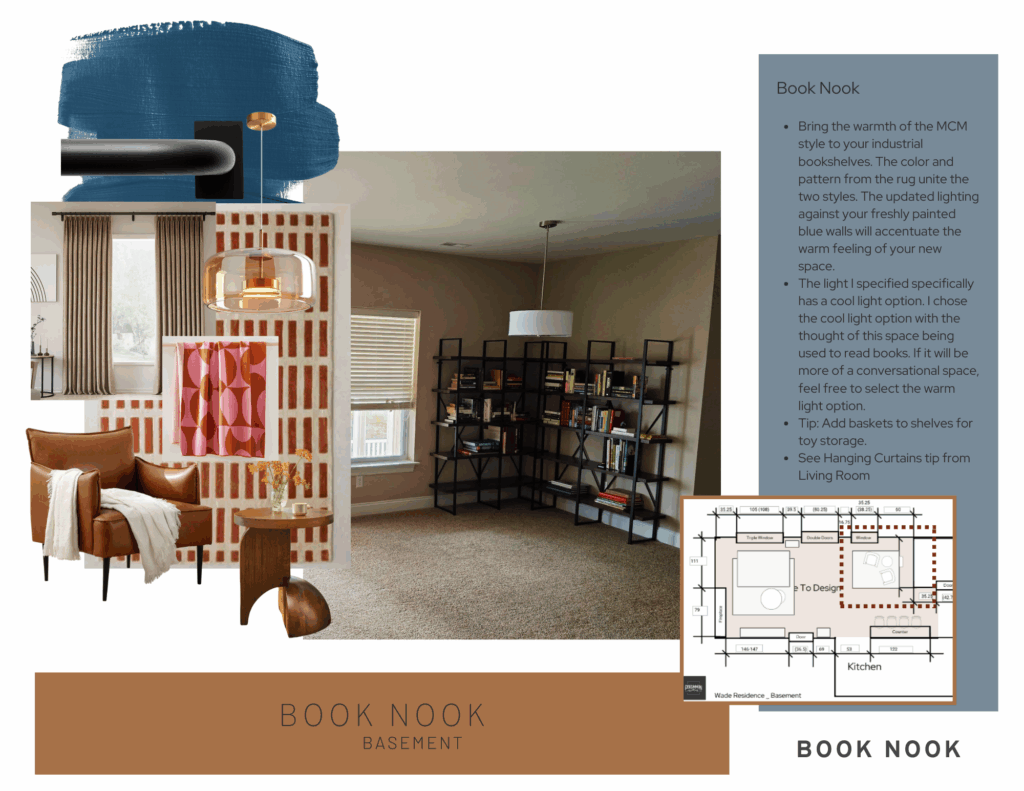
A Mid Century Modern-Inspired Mood Board
What Wasn’t Working (And Why It Stayed That Way)
Notice that their overwhelm wasn’t a lack of taste or effort. This couple was simply overwhelmed without a plan. They needed clarity and confidence to get them a home that felt like their own, they needed a trained interior designer, and that’s exactly what they got. But more on that later.
Here’s where they were stuck before we worked together:
There was intimidation from moving out of a furnishing apartment to a forever home
They had too many decisions in front of them with not enough direction
There was anxiety around “doing it wrong” – what if there was a better way and they just didn’t know??
They had no clear plan for how to budget over time
And, they had a fear of buying things that wouldn’t work together
So the house stayed unfinished. Not because they didn’t care, but because the starting point felt impossible.
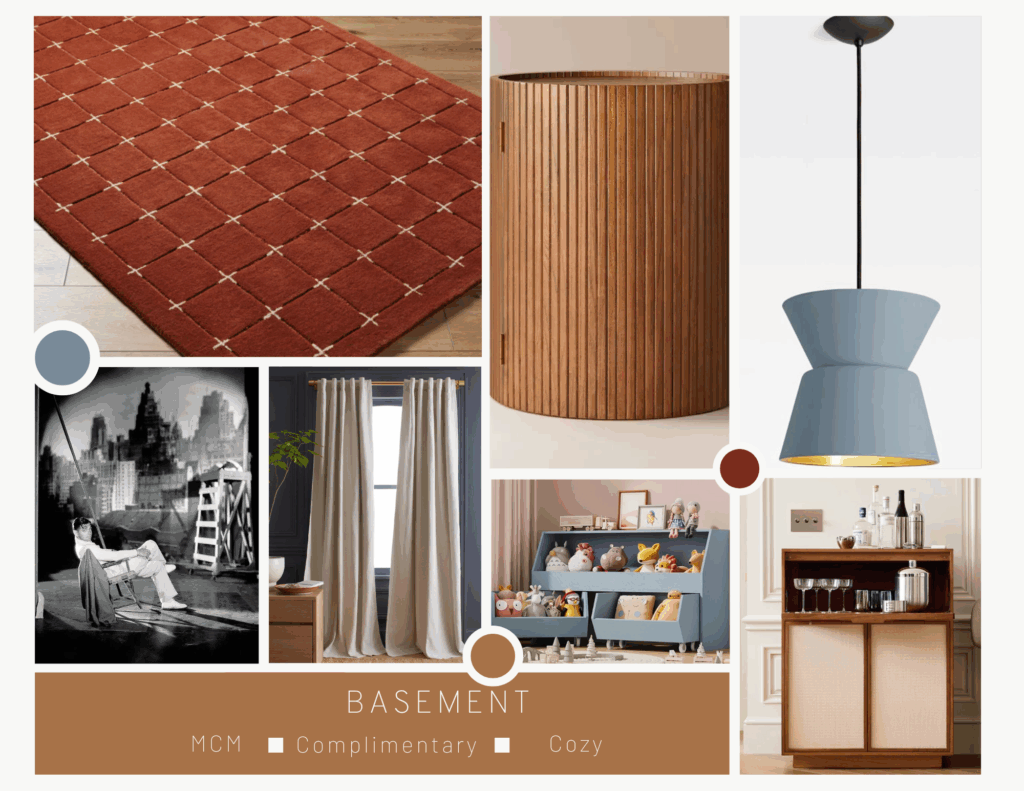
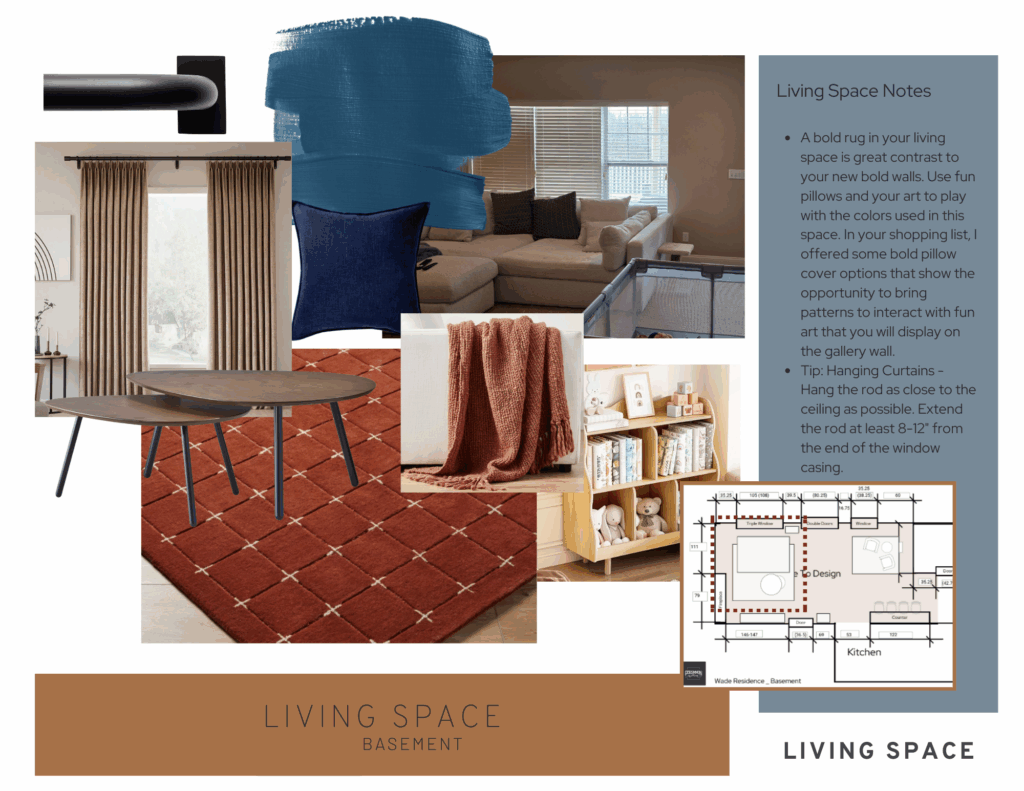
Second Mid Century Modern-Inspired Mood Board for their basement
The Interior Design Goal: Create A Home That Felt Comfortable, Complete, and Livable
More than anything, they wanted the following in their interior design:
A home that felt welcoming when they walked in
A space they could confidently host in
A design that worked for their family — including a young toddler
A plan that allowed them to move forward without pressure
This wasn’t about trends or filling space for the sake of it.
It was about creating a home that felt lived in, loved, and thoughtfully put together.
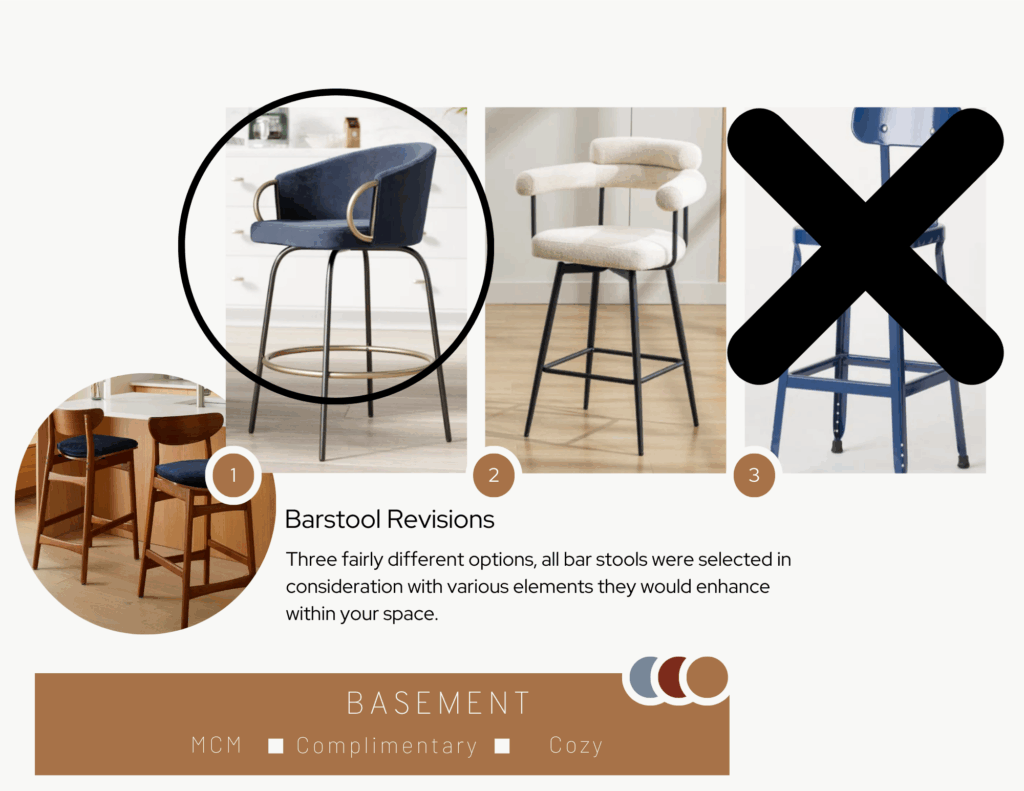
We took a deep dive on preferences from lighting to bar stools for their MCM-inspired basement.
The Interior Design Process: Simple, Supportive, and Clear
This project followed my core interior design process — intentionally paced and clarity-first.
Step One: The Interior Design Evaluation The St. Louis couple completed a detailed evaluation that helped put words to what felt scattered in their minds.
This is where something important clicked: They already knew they loved mid-century modern design. However, they also gravitated toward boho warmth. It was my job to effortlessly blend their desired styled together.
Seeing their inspiration images together made it clear how those styles could coexist cohesively instead of competing.
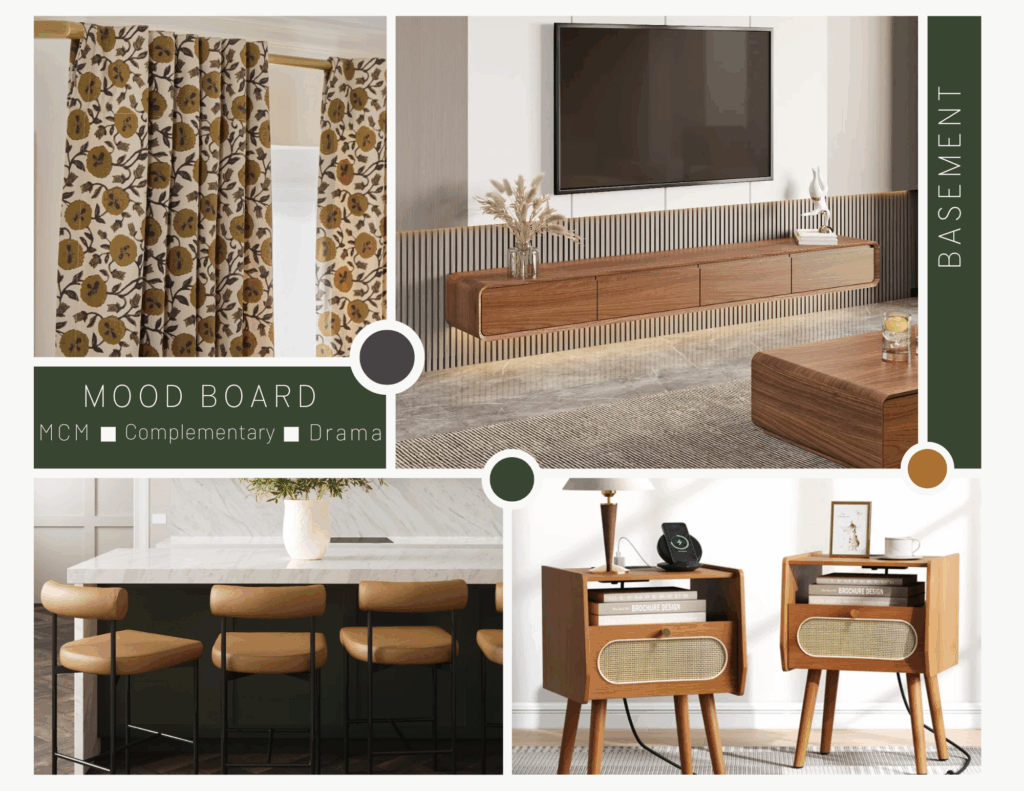
Each mood board provided detailed descriptions as to why each piece was selected. This allowed them to make informed decisions when deciding to move forward with each design.
Step Two: The Interior Design Conversation We talked through their needs, their lifestyle, and their concerns. Including chatting through budgeting and decision fatigue.
This wasn’t about rushing to solutions. It was about listening and honoring what mattered most to their family.
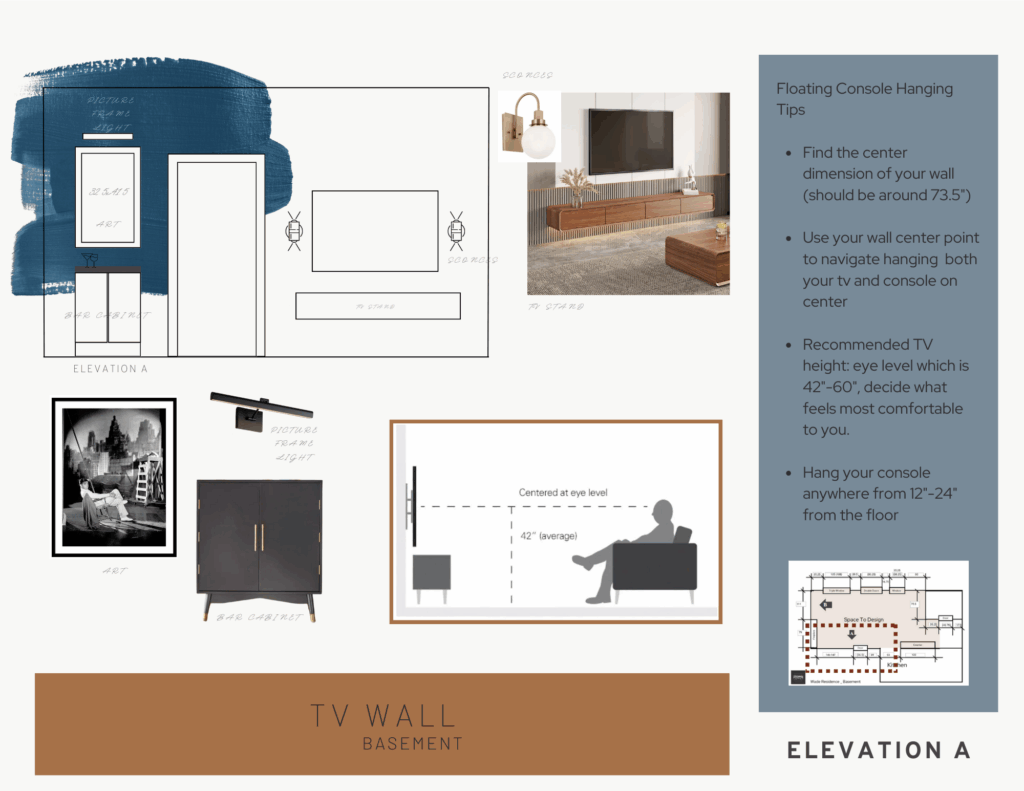
Each wall was designed in detail to ensure that their budget would be maximized and they would know exactly what to expect.
Step Three: The Interior Design Plan From there, I created mood boards and a clear plan that showed exactly how the space could come together. We kept their existing sofa as a foundation piece and designed the space to integrate gracefully with their existing architectural elements, such as their fireplace.
By the end of the project they had no guessing, no impulse buying, and no pressure to do it all at once.
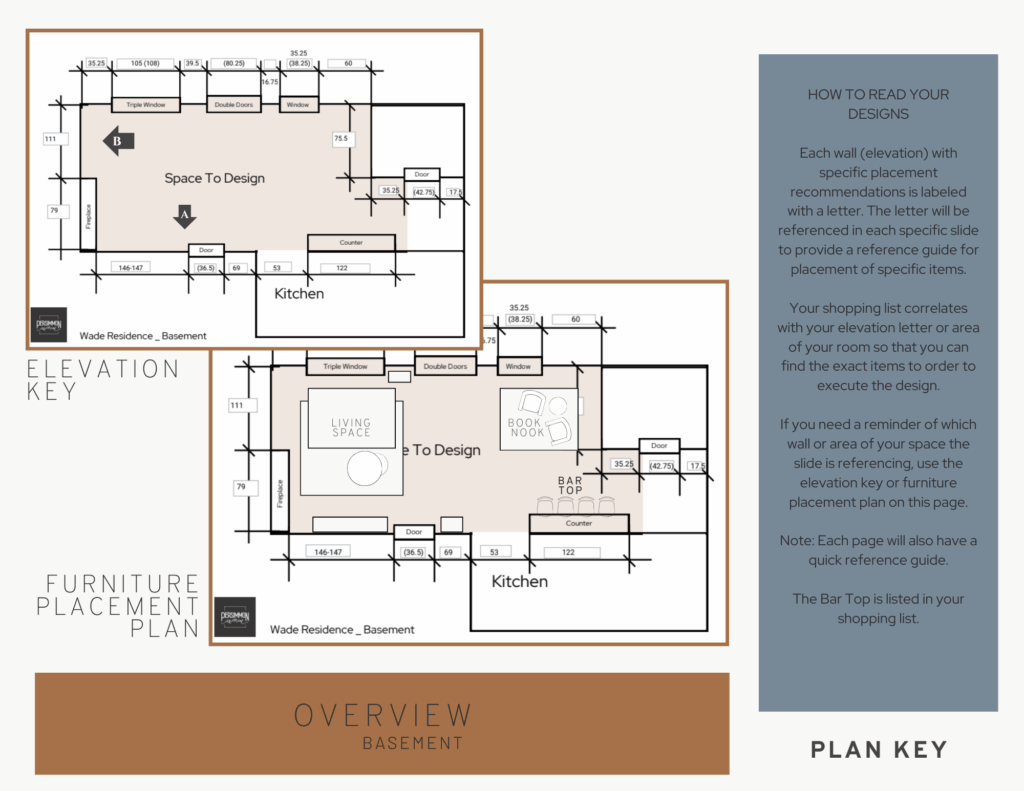
Each area of their space was detailed and specified even with floor plans to reference locations of their design implementation.
The Interior Design Direction
The final design blended:
Clean mid-century lines
Warm textures and organic elements
Family-friendly materials
Hidden functionality (including a concealed dry bar)
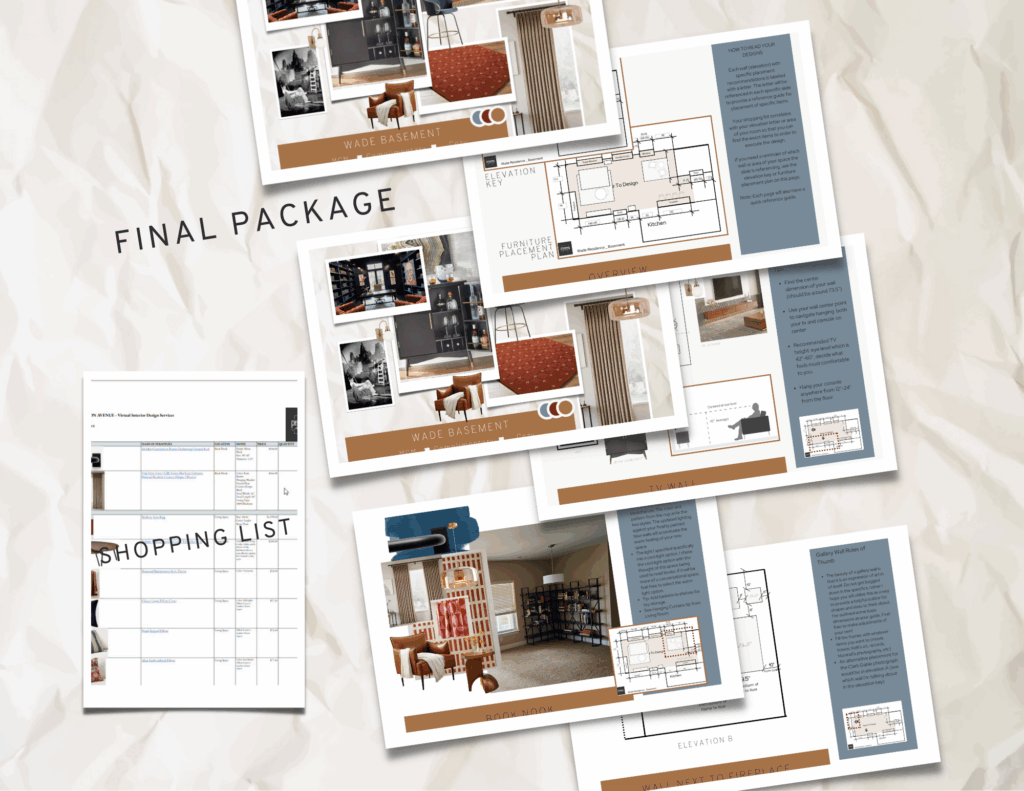
A preview of the final package all put together.
The space was designed to:
Support hosting and gathering
Be safe and functional for a toddler
Feel elevated while being able to relax in the space
Importantly, we didn’t over-style or over-fill the room. Every piece was selected with intention which served both the look and the life happening inside it.
Relief Came Before the First Purchase
When they saw the plan, their response said it all:
“Ooooh, I can’t wait!!! This is beautiful, Emma.”
Soon after:
“We were so excited to see your email come through. We both love Option 1 so, so much.”
And before ordering a single item:
“Thank you, Emma! We would definitely like to move forward.”
That’s one of my favorite parts of this work! I LOVE watching confidence replace anxiety before implementation even begins.
The Result: More Than a Finished Room
This project wasn’t about a dramatic before-and-after reveal.
It was about peace.
Client testimonial:
“We loved our experience with Emma helping us design our blank-slate basement. Communication throughout the entire process was easy and prompt… Somehow, from the fairly brief questionnaire, Emma was able to put her finger directly on the pulse of our style.”
Showing the Book Nook in their Mid Century Modern-inspired basement.
They now have:
A space that supports hosting and family life
A clear ordering plan that feels manageable
Confidence to continue working through the rest of their home, one room at a time – and we did just that! (See their guest bedroom and master bedroom coming soon!)
And most importantly they gained momentum in replacement of paralysis.
Why This Worked
This project worked because:
We started with clarity, not shopping
Budgeting was respected and paced
Existing pieces were honored
Decisions were made with intention, not pressure
The sitting area was an important part to the design as it needed to be versatile with many living considerations such as movie nights, window treatments, and toddler-proofing.
Without a plan, they would have either:
Purchased items hoping they worked together
Or stayed stuck, staring at an unfinished space
Instead, they moved forward with confidence.
If This Feels Familiar…
If you’ve been living in your home for years thinking:
I know I like things — I just don’t know how to pull it together
I don’t want to waste money making the wrong choices
I wish someone would just help me see the whole picture
This story can be yours too.
Design isn’t about filling space with more things. It’s about creating clarity so your home can support the life you’re living.
And that’s exactly what I love helping families do.
Learn all about our process at our detailed article below. Or, get started today with our free survey!
The process typically begins with a consultation where we discuss your space, goals, lifestyle, and challenges. From there, I create a tailored design plan that may include layout recommendations, material selections, and styling guidance—always with function and personality in mind.
Do you offer interior design services in my city?
Yes. I offer interior design services for homeowners anywhere in the US. Depending on your needs, services may include in-home design, virtual consultations, or guided design plans.
Is interior design only for large homes or full renovations?
No. Interior design services are just as valuable for single rooms, small spaces, or homes that don’t need major construction. Whether you’re furnishing a living room, reworking a basement, or refreshing a bedroom, thoughtful design can make a meaningful difference.
Can you help if my spouse and I have very different styles?
Yes! This is one of the most common reasons people hire an interior designer. My role is to find common ground, balance preferences, and create a design that feels right for both of you without compromising function or comfort.
Do you only work with bold or colorful design styles?
Not at all. While I believe homes should feel full of life and personality, that looks different for everyone. “More funk” doesn’t mean loud or chaotic, it means thoughtful, personal, and expressive. Whether your style is subtle, classic, modern, or eclectic, the goal is a space that feels like you.
What if I don’t know my design style?
This is more common than you think, and it’s completely okay. You don’t need a clearly defined style to work with an interior designer. Through conversation, observation, and guided decisions, I help uncover what you’re drawn to and how to make it work cohesively in your home.
How do I know if I need an interior designer?
If you feel overwhelmed by choices, stuck with a space that doesn’t feel right, or unsure how to define your style, working with an interior designer can save you time, money, and frustration. Many clients come to me saying, “I know this isn’t working—but I don’t know why.” That’s exactly where professional design support helps most.
What does an interior designer actually do?
An interior designer helps you translate your lifestyle, personality, and needs into a cohesive, functional home. Beyond choosing furniture or colors, I consider layout, flow, scale, comfort, and how your space needs to work for your everyday life. My goal is to create a home that feels intentional, personal, and livable—not just visually pleasing.